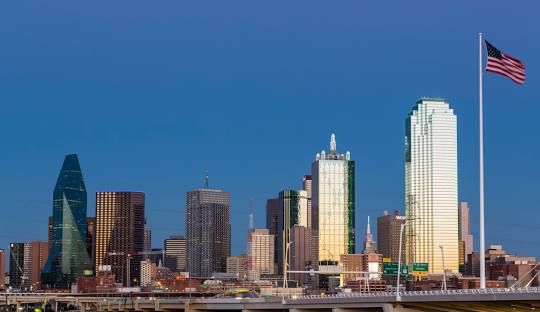
Dallas: A Transportation and Economic Powerhouse
Posted by on
Dallas and neighboring Fort Worth owe their early growth to the construction of major railroad lines, which connected the region to North and East Texas’s cotton, cattle, and oil industries. Later, the development of the Interstate Highway System solidified Dallas’s role as a transportation hub, with four major interstates intersecting the city and a fifth forming a loop around it. The establishment of Dallas Fort Worth International Airport, one of the world’s largest and busiest airports, further reinforced the city’s position as a key inland port. Local transit is supported by Dallas Area Rapid Transit (DART), which operates comprehensive rail and bus networks across the city and surrounding suburbs.
Today, Dallas boasts a diverse and robust economy. Key sectors include defense, financial services, information technology, telecommunications, and transportation. The Dallas–Fort Worth metroplex is home to 23 Fortune 500 companies—the second-most in Texas and fourth-most nationwide—with 11 headquartered within Dallas city limits alone. The region is also a center for higher education, featuring over 41 colleges and universities, more than any other Texas metropolitan area. Reflecting its economic and cultural growth, Dallas is home to a diverse population representing a wide range of ethnic, cultural, and religious backgrounds.